
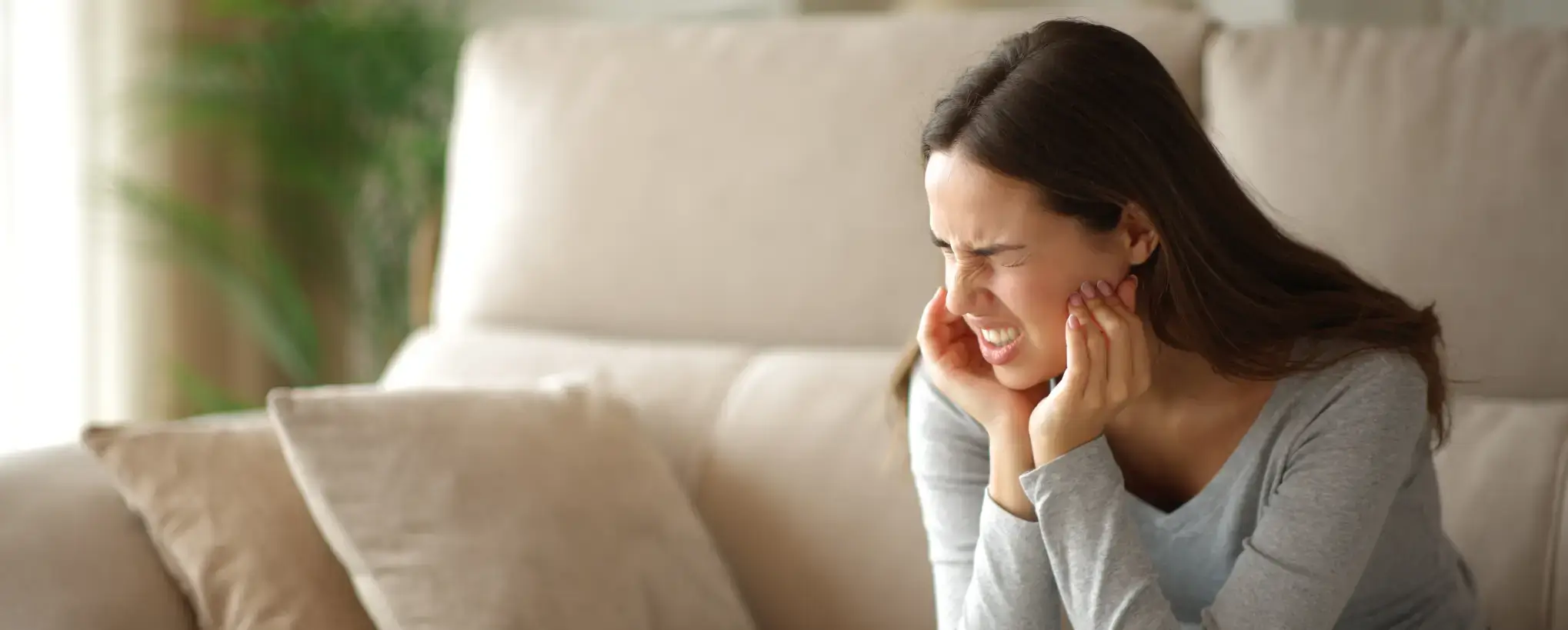
Waking Up With Headaches? It Could Be TMJ
What Is the TMJ?
The temporomandibular joint is the hinge that connects your lower jaw (mandible) to your skull, just in front of each ear. When something goes wrong, whether due to teeth grinding, jaw misalignment, stress, injury, or arthritis, the result can be a cascade of painful symptoms.
The Connection Between TMJ and Morning Headaches
Many TMJ sufferers clench or grind their teeth (a condition called bruxism) throughout the night without even knowing it. This puts enormous pressure on the jaw muscles, the joints themselves, and the surrounding nerves. By morning, those overworked muscles are tired, inflamed, and tense, and that tension radiates as a headache at the temples, behind the eyes, or at the base of the skull.
Other Symptoms of TMJ Disorder
Morning headaches are rarely the only sign. Do any of these sound familiar?
- Jaw soreness or stiffness when you wake up
- A clicking, popping, or grinding sound when you open or close your mouth
- Pain or tenderness in the jaw, face, neck, or shoulders
- Earaches or a sense of fullness in the ears with no infection present
- Difficulty fully opening your mouth
- Teeth that look flattened, chipped, or worn down
How We Treat TMJ in Austin
Custom Night Guards
A professionally fitted oral appliance worn while you sleep repositions your jaw and prevents grinding, taking pressure off the joint and allowing muscles to rest and recover.
Bite Adjustment
If a misaligned bite is contributing to TMJ stress, we can address the underlying occlusal issue.
Botox for TMJ
Therapeutic Botox injections into the masseter muscles reduce the intensity of grinding and clenching, providing significant relief for many patients.
Lifestyle and Physical Therapy Guidance
We'll discuss strategies to reduce jaw tension during the day, including exercises and stress management techniques.
Don't Keep Starting Your Day in Pain
Morning headaches caused by TMJ will not go away on their own, and over time, untreated TMJ disorder can lead to more serious joint damage.